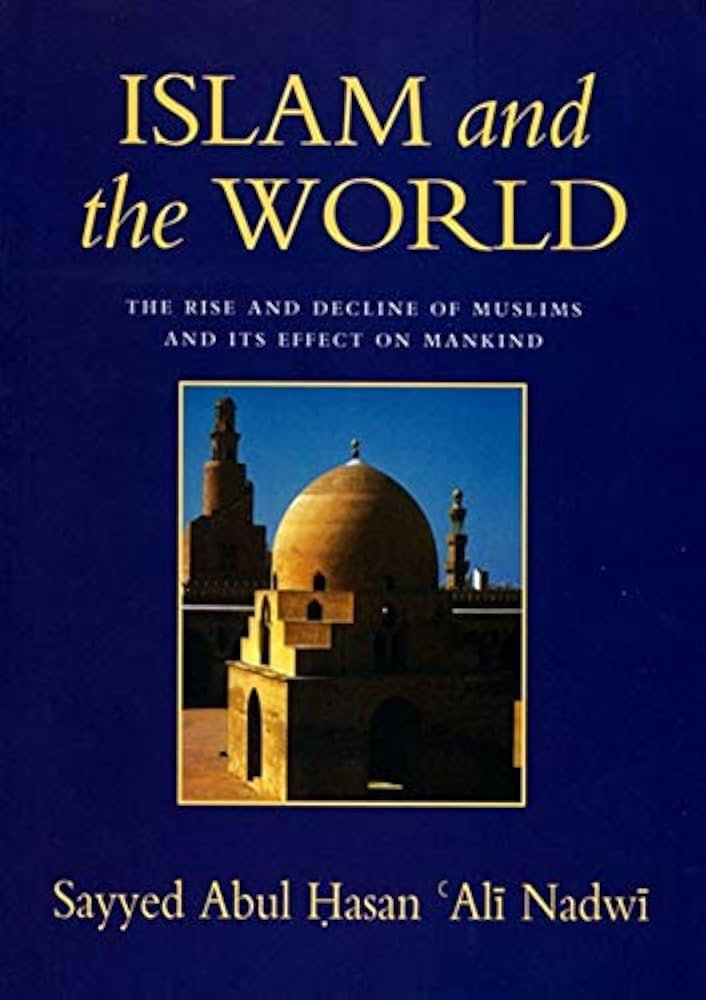
Written in 1950, this ~250-page book by Sayyid Abu’l Hassan Al Nadwi delves into the rise and fall of Muslims and its impact on the world. Written not as a historical account but as an exploration of its deeper consequences and the stark reality of its aftermath. The author attempts to foster an appreciation of Islam in human history, cutting through romanticized and sheltered versions that some of us may have read. He draws upon the indubitable social, economic, moral, and spiritual ascendancy of Islam and its eventual weakening, shaping not only Arabic but the broader world.
Islam is presented by Al Nadwi as a complete, holistic framework for life. The crux of his argument lies in that the decline of the Muslim world wasn’t exclusively about losing rituals or physical acts of worship, but drifting away from the spiritual, moral and ethical guidance of Islam. He points to this spiritual connection throughout the book that has led to the current state of the world as he was writing this book in the 1950s.
The first chapters centre on the condition of the Muslim world, starting with the period before the Prophet Muhammad ﷺ , through to his life, and the years following his passing. Within these sections, the author outlines the societal plights of that time and how the Prophet’s message from God ﷻ was the antidote for those plights. The Arabs, wandering without aim and purpose following the corruption of Ibrahim’s (عَلَيْهِ ٱلصَّلَاةُ وَٱلسَّلَامُ) message, find a renewed sense of purpose through Islam, which not only transformed their own society but impacted every society they touched. The author provides an irresistible and universal appeal to Islam, one that raised the moral and ethical standard of humanity amongst other traits.
As the book progresses, Al Nadwi begins to touch upon the early embers of decline. After the death of the Prophet Muhammad ﷺ and the end of the Rightly Guided Caliphs (رَضِيَ اللَّهُ عَنْهُمْ), society begins to drift from its moral compass, as competing ideologies began to take root within the Muslim world.
Al Nadwi dedicates a chapter where he links the decline of the Muslim world to broader global shifts. The decline of Christianity in Europe was closely tied to the rise of materialism, rationalism and the like. These competing systems, according to the author, led to the erosion of morality and ethics – concepts we now dismiss as little more than “terms and conditions”. I particularly enjoyed how he engaged with Western thinkers, such as Machiavelli and took from their books; showing just how well-read he was and how deeply he understood the intellectual discussions of the time.
The last two chapters are the heart of the book. The author presents a vision for the future – one that is emotional and challenging. He calls on the reader to reflect on their own stagnation and to revive themselves, using the state of the Muslim world as a context for personal and collective renewal. Al Nadwi discusses the concept of progress – not as economic growth or military strength – but a restoration to clear purpose and sincerity in worship. Before we can regain what we have lost, our hearts and mind need changing.
One point of critique I would raise is the book’s omission of Andalusia and its impact on Europe. While Al Nadwi spends a great deal of time on the decline of the Muslim world, he doesn’t touch on the significant contributions of Andalusia. I believe Al Nadwi missed an opportunity to reflect on the exchange of ideas and cultures between the East and West. Similarly, the role of Baghdad under the Abbasids, the Ottomans, and even regions like Southeast Asia are largely overlooked. While Al Nadwi criticizes the decadence of these periods for indulgence and decay, he doesn’t give enough attention to the enduring intellectual and cultural contributions they made.
To conclude, Dr. Nadwi’s (رَحِمَهُ ٱللَّٰهُ) book is a classic read for anyone and everyone who should read this concise yet comprehensive read on the state of the Muslim world. Though it was written over 70 years ago, its messages about revival and renewal are relevant today as they were back then. Al Nadwi makes one thing clear throughout his book: revival is not about looking back with nostalgia. It’s about an honest self-reflection, sincere repentance and reform rooted in divine guidance. Where there is decadence and confusion, there is opportunity for renewal. This book doesn’t just challenge the readers to think; it asks what they can do to treat a wounded world. In short, what role do you play in seizing the opportunity to change? Whether you’re a student, a teacher, a scholar, or simply a layperson, this is a call to action for everyone.

 Ilhaam Institute
Leave a comment